


Policy-driven Multipath Validation for Modern Networks

Every day, vast amounts of data travel across the internet. The process often feels instantaneous and effortless — messages appear, videos load quickly, and files arrive exactly where they should. From a user’s perspective, information seems to move directly from one point to another without much complexity, with everything conveniently at our fingertips.
Behind the scenes, however, modern computer networks are far more complex than they appear. They form the critical infrastructure that modern society relies on every day. From electric power grids and financial markets to healthcare services and emergency response systems, these networks underpin many of the technologies and services we depend on daily.
As these networks become more interconnected, they also become primary targets of cyber threats. Today, nation-states invest resources in employing skilled engineers to secure and safeguard artificial intelligence (AI) systems, while cybercriminals increasingly deploy AI techniques to exploit vulnerabilities and launch more sophisticated attacks, turning cybercrime into a trillion-dollar global industry. As our reliance on this digital ecosystem continues to grow, so does the need to safeguard the physical environments woven into it.
Traditionally, cybersecurity has relied on point solutions, where patches are reactive and designed to address specific threats or isolated IT domains. While these solutions often provide best-in-class features, this fragmented approach creates an overreliance, leading to disconnected visibility and an increase in an organization’s overall risk profile. In a cyber-plexus environment, where digital and physical infrastructures are increasingly inseparable, a compromise in network security can potentially disrupt critical real-world services.
The increasingly dynamic and distributed nature of modern networks makes ensuring that network policies (rules that define how data should be processed, handled, and secured) are consistently enforced more challenging. If data can bypass important security checks or be redirected without triggering any alarms, systems may be left exposed to hidden security risks.
To address this challenge, TSCP-DC researchers developed SecureMPV, a policy-driven multipath validation framework for modern networks.
From Reactive Defense to Provable Security
SecureMPV takes a different approach to protecting data in real time. Instead of guessing or speculating on the specific route that data might take, SecureMPV enforces strict, policy-driven processing sequences. It delivers provable guarantees that data is handled exactly as intended, ensuring that security policies cannot be easily ignored or bypassed.
SecureMPV achieves this through two key components:
- Advanced formal methods: integrating mathematical techniques with programming language theory to model, synthesize, and guarantee expected system behavior.
- Cryptographic evidence: providing proof that required processing steps have been completed.
While the underlying techniques are mathematically rigorous, the central idea is straightforward: validate that the network behaved as intended, even when the exact route taken may vary.
As modern networks continue to grow in scale and complexity, ensuring absolute trust in network behavior may become just as important as ensuring successful data delivery. Future systems will need to track how data is processed and prove that network policies have been correctly enforced throughout their journey. By enabling organizations to mathematically validate that data flows follow the intended processing sequences, SecureMPV moves beyond reactive, fragmented defense mechanisms. Instead, it provides a resilient, provable approach to validating network behavior while helping secure and maintain trust in the critical, dynamic digital environments that modern society depends on.
To learn more about our research and scientific insights, visit TSCP-DC or download informational materials here.
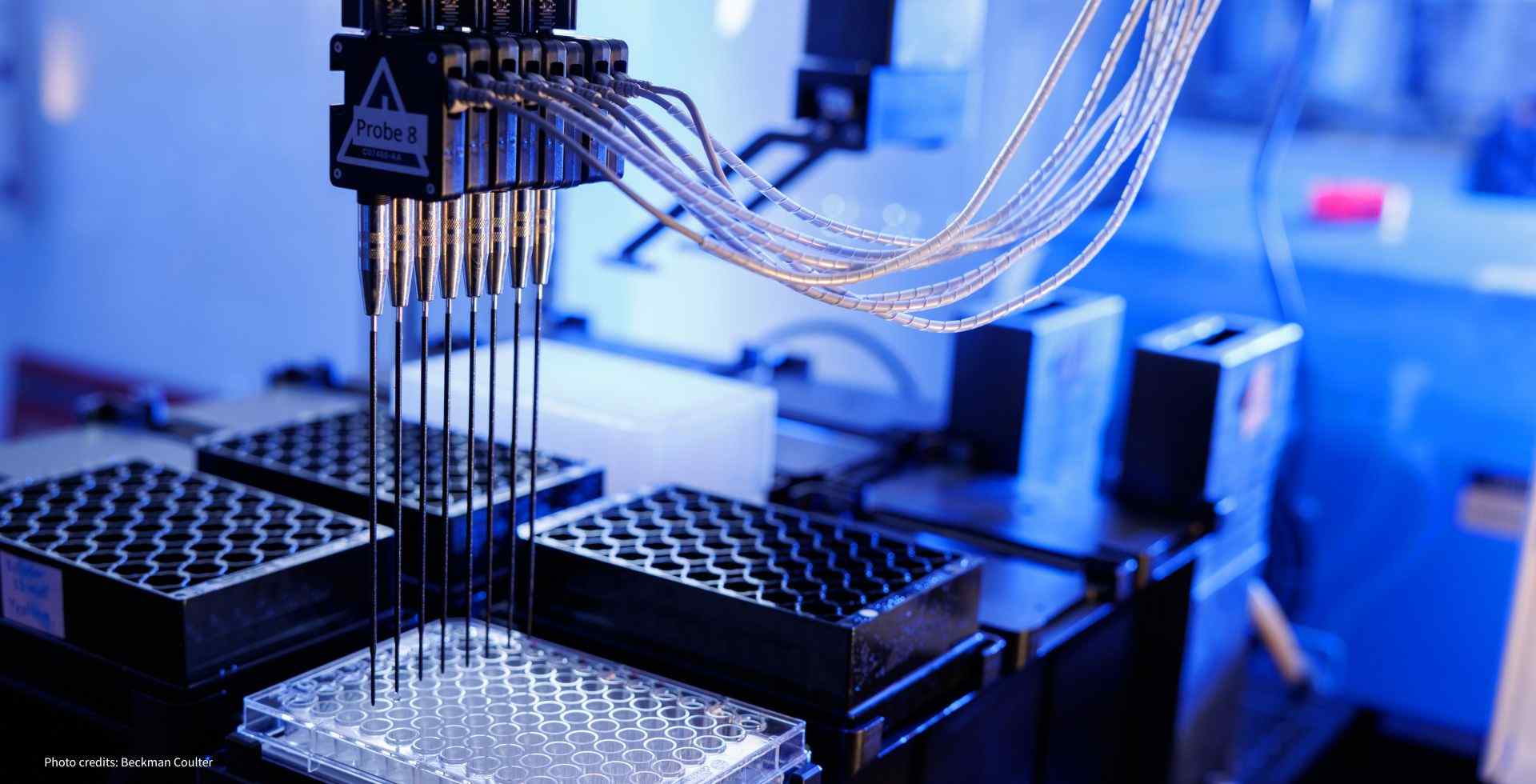
When we think about how food is made, most of us picture farms, fields, or fishing boats. We imagine crops growing under the sun and livestock raised on land. But what if some of the ingredients in tomorrow’s food could be produced in a tank, using microorganisms no larger than a speck of dust?
It may sound like science fiction, but it is already happening.
In fact, microorganisms have been helping humans make food for thousands of years. The yeast that helps bread rise, the bacteria that turn milk into yogurt, and the microbes responsible for many fermented foods have long been part of our daily lives. Today, scientists are building on this ancient process through a technology known as precision fermentation.
Unlike traditional fermentation, which produces a mixture of compounds, precision fermentation allows scientists to engineer selected host strains such as yeast, fungi, and bacteria to produce specific target products. These can include proteins, lipids, vitamins, and other nutrients that are commonly used in food products.
The Food Security Challenge
Why does this matter? Around the world, food systems are facing increasing pressure. Growing populations, climate change, supply chain disruptions, and limited natural resources are challenging how food is produced and distributed. In Singapore, where more than 90 percent of food is imported, ensuring a resilient and sustainable food supply has become an important national priority.
As countries explore new ways to strengthen food security, precision fermentation has emerged as one of the technologies attracting significant attention. By harnessing the natural metabolic capabilities of microorganisms, valuable food ingredients can potentially be produced with fewer resources and in more controlled environments than conventional methods. This presents an opportunity for bio-manufactured food production to take place in indoor vertical facilities. Such systems could help reduce exposure to climate-related disruptions and supply chain uncertainties, while supporting a more resilient food ecosystem.
To unlock the full potential of precision fermentation, scientists must first identify and develop high-performing host strains that can perform reliably and efficiently at scale. Many naturally occurring strains were never designed for industrial food production. Some produce target products only in small amounts, while others generate unwanted by-products (such as toxic metabolites and anti-nutrients) that can reduce efficiency or affect product quality. Understanding these biological limitations is an important step towards large-scale food production.
At the same time, building consumer confidence and nurturing acceptance remains essential. As new food technologies enter the market, questions surrounding safety, transparency, responsible innovation, and nutritional benefits become increasingly important. Ensuring that production strains are both effective and suitable for food applications is therefore a critical part of advancing the field.
PreFerS: Driving Sustainable Production Solutions
This is where the Centre for Precision Fermentation and Sustainability (PreFerS) plays an important role.
One of PreFerS’ key research areas focuses on microbial cell engineering — selecting, characterizing, and engineering the microorganisms used in precision fermentation. Scientists are developing approaches to enhance strain performance, improve production efficiency, and reduce the formation of unwanted by-products. By minimizing process wastes and optimizing resource efficiency, it supports a sustainable production process that reduces the environmental impact of food systems while maintaining the high safety standards expected for food applications.
By deepening our understanding of microbial biology and developing better tools to work with these microscopic producers, PreFerS addresses some of the scientific challenges that stand between promising laboratory discoveries and real-world food solutions.
The microorganisms driving precision fermentation may be invisible to the naked eye, but their impact could be far-reaching — these tiny organisms help shape a future where food production is more resilient, sustainable, and adaptable to the challenges ahead.
The Future: From Tanks to Plate
The transition from scientific research to real-world impact can be seen in the production of high-value nutrients such as Biotin and Vitamin B12. For land-and-resource-scarce nations like Singapore, advancing into biotechnology like precision fermentation could contribute to long-term food resilience and nutritional security. By optimizing the performance of microorganisms and host strains, PreFerS is helping to develop scalable production approaches that support public health while reducing some of the environmental challenges associated with conventional manufacturing methods.
Explore the science behind our research. Visit PreFerS or download informational materials here.