Overview
Synthesizing precision fermentation workflows to produce Vitamin B12-enriched foods.
The Building Blocks of Micronutrients:
Vitamin B12 Production through Precision Fermentation
Vitamin B12, also known as cobalamin, is a key micronutrient in humans for energy production, red blood cells formation, DNA synthesis, and the function and development of the brain and nerve cells. However, consuming enough B12 is increasingly challenging with aging and dietary shifts.
- Aging Factor
B12 is commonly found in protein-bound forms. As people get older, the reduced stomach acid and pepsin release results in decreased protein breakdown, hence a reduced release of B12 from the food matrix. Research data shows that approximately 6% of adults younger than 60 have B12 deficiency, while the rate rises to 20% in those over 60. - Dietary Shifts
While B12 can be found in many foods, it is naturally found in foods of animal origin and not in plant foods, unless artificially fortified, or through microbial fermentation. With more people moving toward plant-based diets, B12 deficiencies could be further amplified.
- Aging Factor
When people are B12 deficient, fatigue, brain fog, low moods, or worse, even nerve damage could arise. Despite Singapore’s thriving food culture, “hidden hunger” quietly emerges. People consume enough calories and feel full, yet they lack vital micronutrients. B12 is difficult to source sustainably. Neither plants nor animals can synthesize it—only bacteria can. It is naturally present in animal-derived foods rather than plants as B12 is produced by microorganisms present in their digestive tract and absorbed and stored in the muscle. Advances in metabolic engineering then make it possible to produce B12 in engineered microorganisms through precision fermentation on a large scale.
A Precision Fermentation Approach to Produce B12 Enriched Foods
One of the key challenges of precision fermentation involves managing consumers’ perceptions and safety concerns of the use of microorganisms and genetic engineering. Traditional genetic engineering methods utilize antibiotic resistance genes for microbial selection, and they are not viable for large-scale operations, as the potential release of engineered microorganisms may pose downstream effects on human and environmental health. A technical concern exists in strain development where, despite the availability of basic genetic toolkits and biological parts, a more in-depth understanding and precise engineering are required for high-yield, industrial strains.
- Non-Genetically Modified (GM) Approach
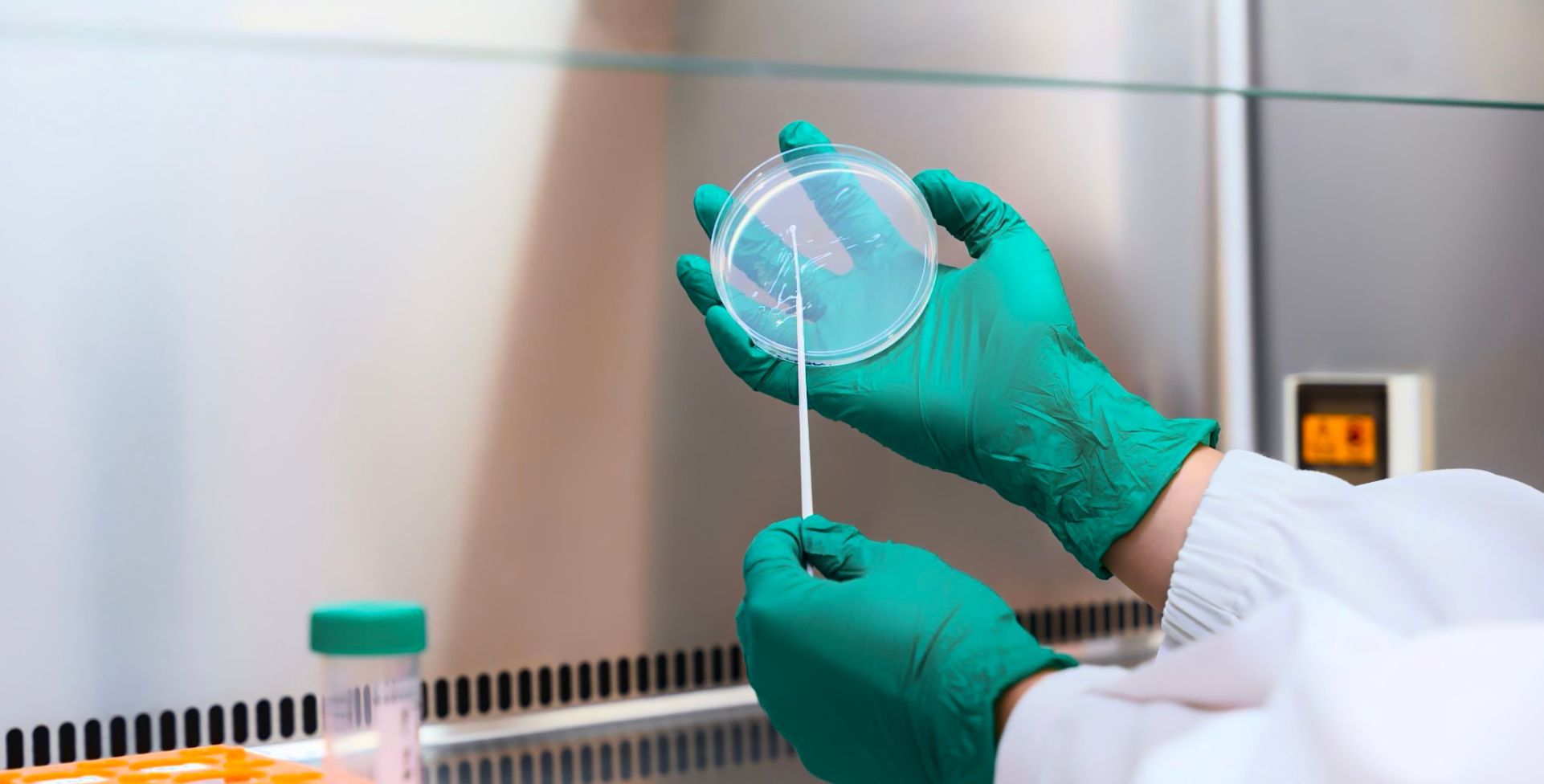
This approach begins with selecting candidate food-grade bacterial strains known to produce B12. High-throughput screening (HTS) is then used to efficiently manage and evaluate millions of mutants obtained from atmospheric and room-temperature plasma (ARTP) mutagenesis. Once promising high producing strains are identified using our HTS platform, the strains’ performance will be further enhanced using non-recombinant technologies, such as adaptive laboratory evolution (ALE). The mutated and evolved strain will then be scaled up through an industrial framework, followed by downstream processing to process the final B12 ingredient.
- Non-Genetically Modified (GM) Approach
- Genetically-Modified Approach
Progressing from the selected and mutated strains from the non-GM workflow, metabolic engineering and ribonucleoprotein-(RNP)-based genome editing are applied to drive higher production of B12 in native B12 producing strains, or strains unable to produce B12. Key genes in the B12 biosynthesis pathway are overexpressed to boost precursor synthesis and product conversion. To maximize yield, combinatorial optimization of promoters and ribosome binding sites is conducted, utilizing only the genes and regulatory elements derived from food-grade microorganisms to streamline DSP and regulatory compliance.
- Genetically-Modified Approach
This dual approach produces the essential vitamin while securing the micronutrients needed for a healthier future. As consumer preferences shift and populations age, hidden hunger remains a public health concern. Scaling up Vitamin B12 production through safe, food-grade biotechnology tackles these challenges sustainably without harming the environment.