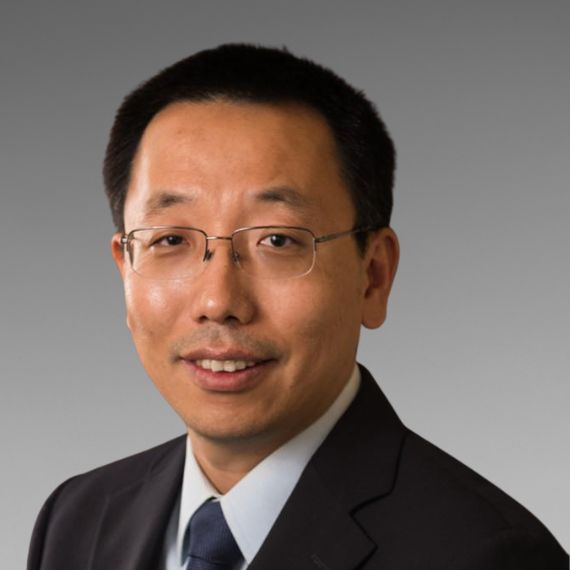
Prof. Bin Cao

Associate Chair (Research); Associate Professor, School of Civil and Environmental Engineering

Nanyang Technological University

BinCao@ntu.edu.sg


Dr. Cao is an Associate Professor in the School of Civil and Environmental Engineering (CEE) and an affiliated Principal Investigator (PI) in Singapore Centre for Environmental Life Sciences Engineering (SCELSE), NTU. He obtained his Ph.D. degree in Chemical and Biomolecular Engineering from National University of Singapore. He then worked on U.S. DOE-funded projects during his postdoctoral training in Washington State University and Pacific Northwest National Laboratory (PNNL).

Since he joined NTU in Dec 2011, his research efforts have been focused on biofilm engineering – a highly interdisciplinary research topic at the interface between engineering and microbiology. Dr. Cao’s specific research interests cover (i) elucidation of fundamental mechanisms in biofilm-mediated environmental processes and biofilm-contaminant interactions and (ii) development of novel approaches to harnessing the power of beneficial biofilms and combating detrimental biofilms for environmental biotechnological applications. Dr. Cao is now serving as an Associate Editor for Water Research, Environmental Research, Critical Reviews in Biotechnology, Frontiers in Cellular and Infection Microbiology (Specialty section: Biofilms), and an Editorial Board Member for Environment International.

Research Interests

  • Biofilms in Natural and Engineered Systems
  • Biofilm-mediated Environmental Bioprocesses
  • Biofilm Biology-informed Biofilm Engineering
  • Biofilm-enabled Biotechnological Applications

Publications

Selected Publications

  • Liu Y, Bairoliya S, Zaiden N, Cao B* (2024) Establishment of plastic-associated microbial community from superworm gut microbiome. Environment International 183: 108349.
  • Koh J, Bairoliya S, Salta M, Cho ZT, Fong J, Neo ML, Cragg S, Cao B* (2023) Sediment-driven plastisphere community assembly on plastic debris in tropical coastal and marine environments. Environment International 179: 108153.
  • Bairoliya S, Koh J, Cao B* (2022) Extracellular DNA in environmental samples: Occurrence, extraction, quantification, and impact on microbial biodiversity assessment. Applied and Environmental Microbiology 88: AEM01845-21.
  • Bairoliya S, Goel A, Mukherjee M, Koh J, Cao B* (2022) Monochloramine induces release of DNA and RNA from bacterial cells: Quantification, sequencing analyses, and implications. Environmental Science & Technology 56: 15791–15804.
  • Wu Y, Zaiden N, Liu X, Mukherjee M, Cao B* (2020) Responses of Exogenous Bacteria to Soluble Extracellular Polymeric Substances in Wastewater: A Mechanistic Study and Implications on Bioaugmentation. Environmental Science & Technology 54: 6919-6928.
  • Bairoliya S, Kumar A, Cao B* (2019) Extracellular DNA in Monochloraminated Drinking Water and Its Influence on DNA-based Profiling of Microbial Community. Environmental Science & Technology Letters 6: 306-312.
  • Mukherjee M, Hu Y, Tan CH, Rice S, Cao B*. (2018). Engineering a Light-responsive, Quorum Quenching Biofilm to Mitigate Biofouling on Water Purification Membranes. Science Advances, 4(12), eaau1459.
  • Mukherjee M, Nishanth M, Liu X, Kang Y, Cao B*. (2016). Confocal laser scanning microscopy-compatible microfluidic membrane flow cell as a non-destructive tool for studying biofouling dynamics on forward osmosis membranes. Environmental Science & Technology Letters, 3(8), 303-309.
  • Wu Y, Mohanty A, Chia WS, Cao B*. (2016). Influence of 3-chloroaniline on the biofilm lifestyle of Comamonas testosteroni and its implications on bioaugmentation. Applied and Environmental Microbiology, 82, 4401-4409.
  • Wu Y, Shukal S, Mukherjee M, Cao B*. (2015). Involvement in denitrification is beneficial to the biofilm lifestyle of Comamonas testosteroni: A mechanistic study and its environmental implications. Environmental Science & Technology, 49, 11551-11559.
  • Mohanty A, Wei L, Lu L, Chen Y, Cao B* (2015) Impact of sublethal levels of single-wall carbon nanotubes on pyoverdine production in Pseudomonas aeruginosa and its environmental implications. Environmental Science & Technology Letters 2: 105-111.
  • Ding Y, Peng N, Du Y, Ji L, Cao B* (2014) Disruption of putrescine biosynthesis in Shewanella oneidensis enhances biofilm cohesiveness and performance in Cr(VI) immobilization. Applied and Environmental Microbiology 80(4): 1498-1506.

Principal Investigators